 CH
CH 
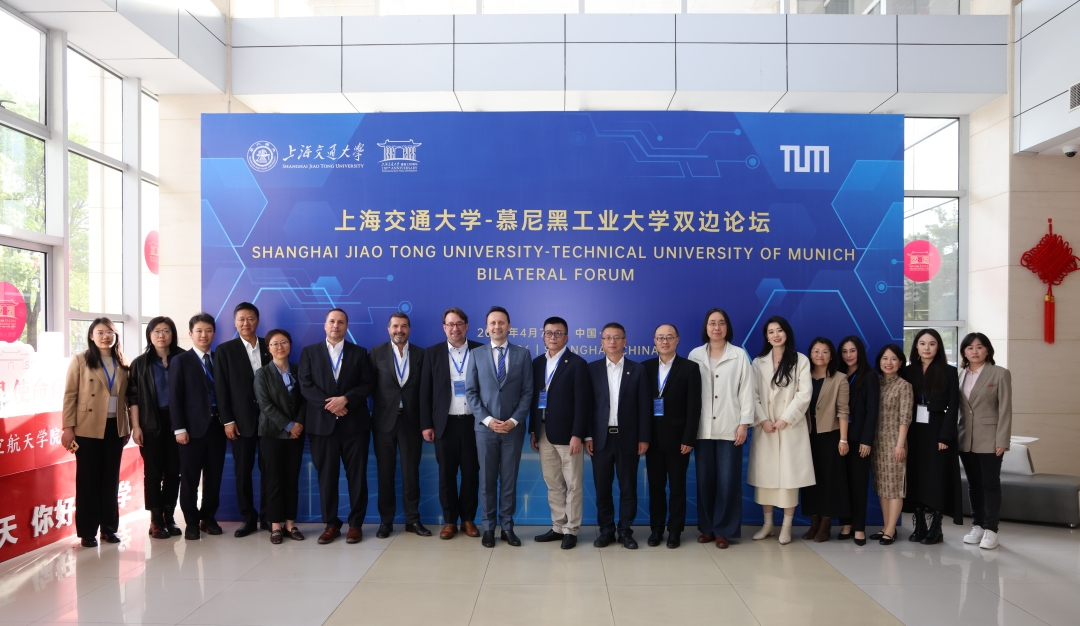
On April 7, as a tribute to the 130th anniversary of Shanghai Jiao Tong University, the SJTU-TUM Bilateral Forum was grandly held at the School of Aeronautics and Astronautics on the Minhang Campus. The forum brought together scholars and industry representatives from both universities, aiming to establish a high-level platform for international academic collaboration and to promote interdisciplinary and cross-regional industry-university-research innovation.
Opening Ceremony: A New Chapter of Strategic Cooperation
In the morning, the opening ceremony of the forum took place in Lecture Hall A114 of the School of Aeronautics and Astronautics, hosted by Wang Qian, Deputy Director of the International Affairs Division at Shanghai Jiao Tong University.


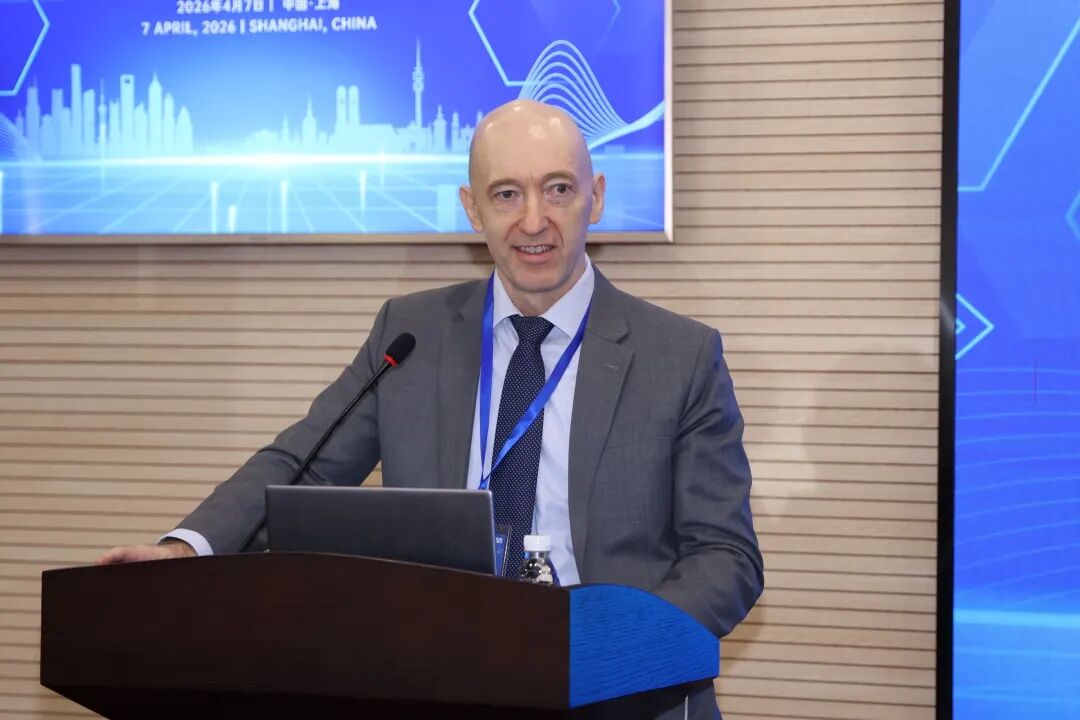
Markus Wächter, Vice President of the Technical University of Munich, reviewed the long-standing cooperation between the two universities, from early student exchanges to extensive collaboration encompassing joint research and faculty visits, expressing anticipation for deepening the partnership in more fields.
Eva Riekenbrauck, a student representative from the Technical University of Munich, shared her genuine experiences during the exchange program and expressed her hopes for the enduring friendship between the two universities. It was reported that 15 students from TUM and 15 students from SJTU will engage in a two-week cross-cultural exchange activity in Shanghai and Suzhou.

Low-Altitude Economy Sub-Forum: Focusing on Cutting-Edge Technology and Industrial Practice
Following the opening ceremony, the Low-Altitude Economy Sub-Forum officially commenced, hosted by Xu Wu, Vice Dean of the School of Aeronautics and Astronautics at Shanghai Jiao Tong University. The sub-forum, themed "Technological Innovation and Industrial Development of the Low-Altitude Economy," facilitated in-depth discussions on key technologies, core equipment, critical industry-wide challenges, and ecosystem development.
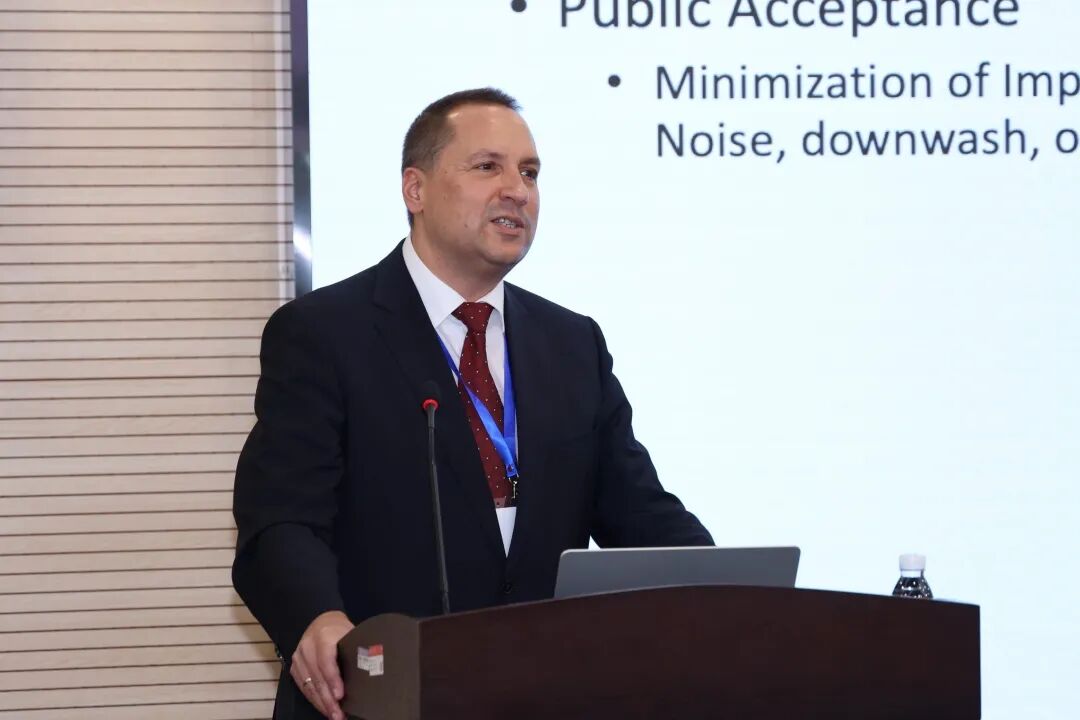
Florian Holzapfel, Director of the Institute of Flight System Dynamics at TUM, delivered a keynote report titled "Collaboration and Achievements of the TUM Institute of Flight System Dynamics in Low-Altitude Economy Safety." Johannes Fottner, a member of the German Academy of Science and Engineering and a chaired professor at TUM’s School of Engineering and Design, provided an in-depth analysis of the complexities of integrated urban air logistics within the low-altitude economy. Peter Biberthaler, a chaired professor at TUM’s School of Medicine and Health, discussed the significant potential of eVTOL in emergency medical services from a trauma surgery perspective. Ilkay Yavrucuk, a chaired professor at TUM’s School of Engineering and Design, shared insights into rotorcraft modeling and simulation research and its supportive role in the low-altitude economy.


Chen Erzhen, Director of the Emergency Medical Center at Ruijin Hospital, Shanghai Jiao Tong University School of Medicine, presented on the "Construction and Application of a Ground-Based Remote Emergency Medical Platform for Commercial Flight Emergencies," introducing the aerial telemedicine system developed in collaboration with China Eastern Airlines. Chen Fang, a researcher at SJTU’s School of Aeronautics and Astronautics and Executive Vice Dean of the Low-Altitude Economy Institute, shared "Recent Breakthroughs in High-Speed eVTOL Electric Propulsion Technology with Ducted Fan Wings." Hong Haichao, an associate professor at SJTU’s School of Aeronautics and Astronautics, delivered a technical report on "Collision Avoidance Trajectory Planning for High-Density Urban Low-Altitude Airspace," while Yang Rong, also an associate professor, presented on "GNSS Multipath Error Assessment for Urban Low-Altitude Scenarios."


Industry representatives also delivered insightful presentations. Tang Bo, General Manager of Shanghai Low-Altitude Economy Industrial Development Co., Ltd., gave a talk titled "From Ground to Sky: Fully Activating the Low-Altitude Economy Ecosystem," systematically introducing the top-level design and practical exploration of Shanghai’s low-altitude economy industry. Tian Yu, Chairman and CEO of AutoFlight Aviation Technology Co., Ltd., presented a report on "The Path to eVTOL Industrialization: From Core Technology Breakthroughs to Ecosystem Collaborative Development," based on the company’s practical experience.


Cooperation Advancement Meeting: Charting the Future Development Blueprint
In the afternoon, the Cooperation Advancement Meeting was held in Conference Room A229 of the School of Aeronautics and Astronautics. Liu Fucheng, Dean of SJTU’s School of Aeronautics and Astronautics, pointed out that the flourishing development of the low-altitude economy requires a deep integration of academic wisdom from universities and market forces from industries. He noted that TUM has world-class research in flight system dynamics, logistics, and emergency medicine, while companies like AutoFlight and Shanghai Low-Altitude Economy Industrial Development Co., Ltd., are key pioneers in technology marketization. He expressed hope that the discussions would spark innovative ideas and jointly advance low-altitude economy technology and industrial implementation.

Representatives from both universities and enterprises engaged in in-depth discussions on university-industry collaboration and talent development. Attendees included four chaired professors from TUM, Tang Bo, Tian Yu, Gui Lin, Executive Dean of the National Elite Institute of Engineering at SJTU, Xie Wei, Deputy Director of the International Affairs Division, and Chen Erzhen, among others.


All parties agreed that the low-altitude economy involves multidisciplinary intersections and urgently requires the establishment of open and collaborative innovation platforms. The meeting concluded successfully in a pragmatic and efficient atmosphere.